
One of the biggest mistakes I see people make is booking treatments based on trends instead of what their skin actually needs.
Just because two treatments are popular does not mean they do the same thing — and choosing the wrong one can leave you spending money with little to no improvement.
I see this all the time:
* Clients booking chemical peels expecting deep acne scars to disappear
* Clients booking microneedling for pigmentation when the concern is mainly surface-level
The reality is, these treatments work completely differently and target different layers of the skin.
So What’s the Difference?
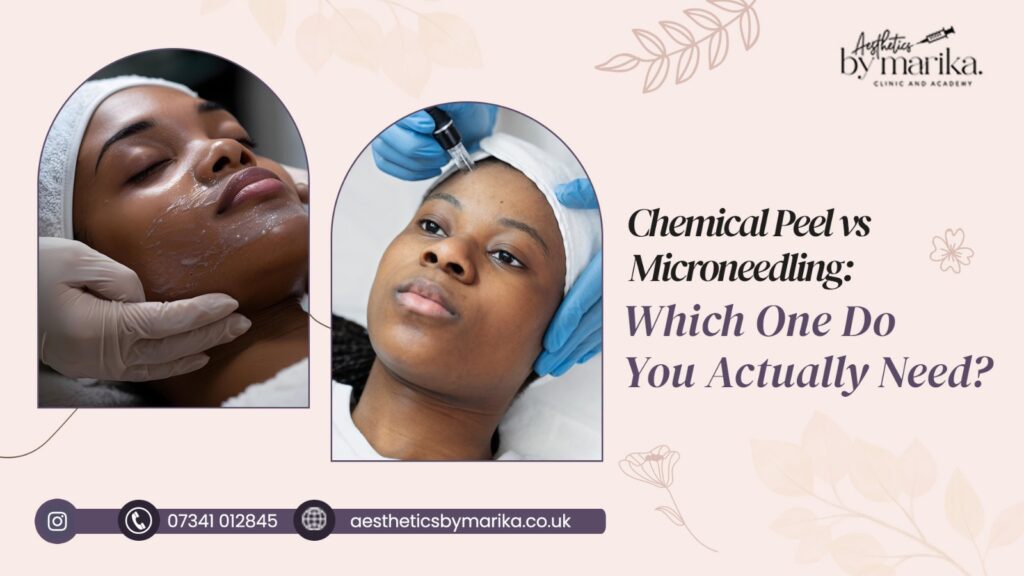
A chemical peel works on the surface of the skin.
Different acids are used to exfoliate away damaged, pigmented, dull skin cells and encourage fresh skin underneath. This is why chemical peels are amazing for:
* Pigmentation
* Uneven skin tone
* Dull skin
* Sun damage
* Post-acne marks
It’s essentially a resurfacing treatment.
Microneedling works deeper.
Tiny needles create controlled micro-injuries in the skin which stimulate collagen and elastin production. This helps rebuild and strengthen the skin internally over time.
This is why microneedling is usually better for:
* Acne scarring
* Enlarged pores
* Skin texture
* Fine lines
* Collagen loss
* Mild skin laxity
So although both treatments improve the skin, they are treating completely different concerns.
If Your Main Concern Is Pigmentation…
A chemical peel is usually the better option.
Pigmentation sits within the upper layers of the skin, so using targeted acids helps break down excess pigment while speeding up skin cell turnover.
This is why peels are often great for:
* Melasma
* Sun damage
* Uneven tone
* Post-inflammatory pigmentation
* Dullness
Your skin generally looks brighter, fresher, and more even after a course of treatments.
If Your Main Concern Is Acne Scarring or Texture…
Microneedling is usually the stronger choice.
Acne scars are structural — the skin has lost collagen in those areas, which creates the “pitted” look. A surface treatment alone cannot rebuild that.
Microneedling stimulates new collagen production within the deeper layers of the skin, helping to gradually improve:
* Scarring
* Texture
* Pore size
* Overall skin quality
The results build over time rather than overnight.
What About Fine Lines?
This depends on the type of lines you have.
If the skin is simply dry, dull, or dehydrated, a peel can help smooth the surface and give the skin a fresher appearance.
If the lines are more related to ageing, collagen loss, or skin laxity, microneedling is usually the better long-term option because it strengthens the skin structurally.
Downtime Matters Too
Chemical peels can involve visible peeling or flaking for a few days depending on the strength of the peel. SPF and sun protection are extremely important afterwards.
Microneedling usually causes redness for 24–48 hours, similar to mild sunburn.
Neither treatment is truly “no downtime”, so timing matters.
So Which One Should You Choose?
Chemical Peel:
Best for:
* Pigmentation
* Dull skin
* Uneven tone
* Sun damage
* Superficial texture
Microneedling:
Best for:
* Acne scarring
* Enlarged pores
* Collagen loss
* Fine lines
* Skin texture and laxity
The best treatment always depends on your actual skin concern — not what’s trending online or what worked for somebody else.
At Aesthetics by Marika, we assess your skin properly before recommending treatment, so you’re not wasting money on procedures that aren’t suited to your concerns.
Because good skin starts with the right treatment plan — not guesswork.
